Oct 30, 2026Buying Guides
What is the Difference Between KD and KA Padlocks? A B2B Guide to Keying Systems
In B2B lock procurement, balancing security and efficiency is crucial. This article breaks down KD and KA padlocks, helping you make smart purchasing decisions.
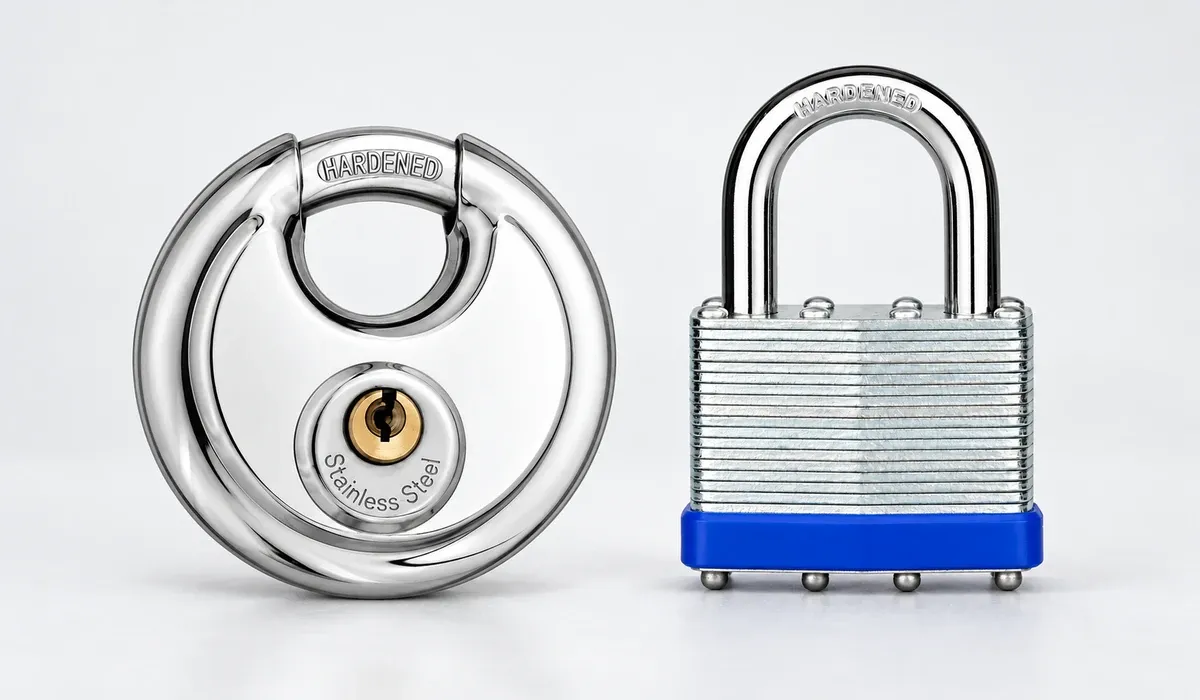
In B2B industrial and commercial procurement, padlocks may seem like simple security hardware, but their internal keying systems directly impact your operational efficiency and asset safety.
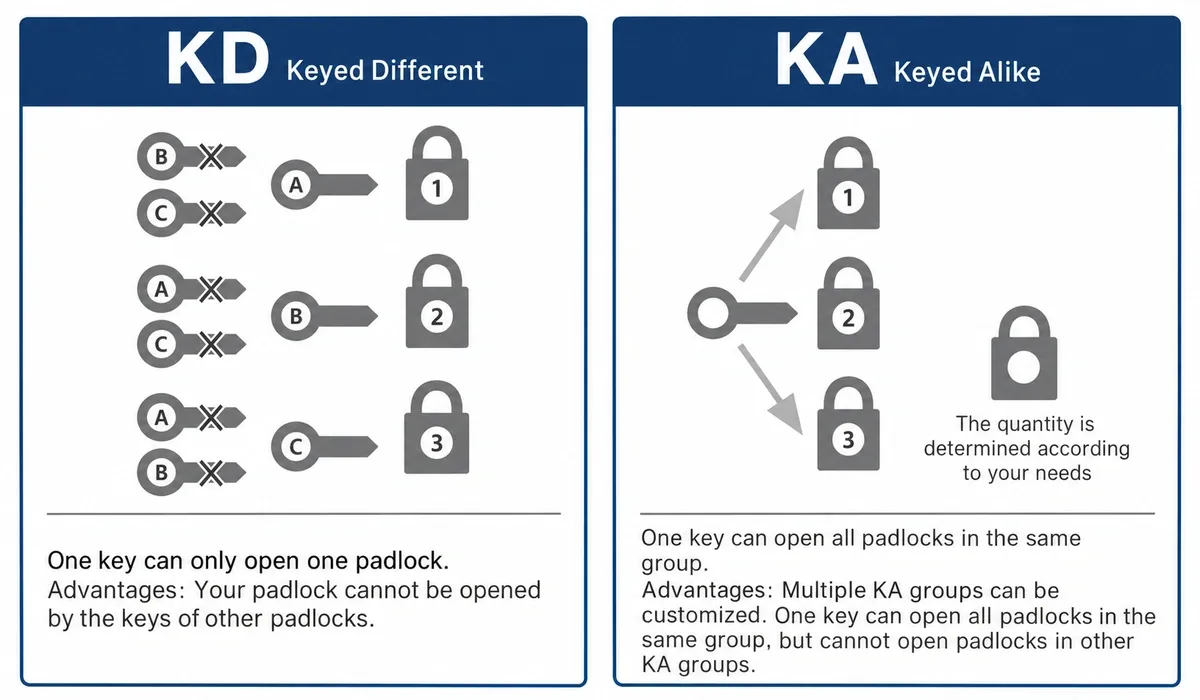
When browsing lock specifications, overseas buyers and project engineers often encounter two core options: KD (Keyed Different) and KA (Keyed Alike). Based on the accompanying structure diagram, this guide breaks down the definitions, features, and ideal applications of both systems to support your B2B sourcing decisions.
1. Understanding KD (Keyed Different) Systems
1. Core Definition
- Official Definition: One key can only open one padlock.
- Image Explanation: As shown in the diagram, the key for Lock A cannot open Lock 2 or Lock 3. Similarly, the keys for Locks B and C only operate their respective, dedicated lock bodies. Each padlock features a completely unique pin tumbler combination and exclusive key.
2. Key Advantages
- High Security and Independence: Your padlock cannot be accidentally opened by keys from other padlocks.
- Cross-Contamination Prevention: Ideal for environments requiring strict access segregation, ensuring every single locking point has exclusive, independent control.
3. Typical Application Scenarios
- Personal storage lockers, school or gym changing rooms.
- Independently managed warehouse bays or rental storage units.
- Independent Lockout/Tagout (LOTO) safety protocols on industrial machinery.
2. Understanding KA (Keyed Alike) Systems
1. Core Definition
- Official Definition: One key can open all padlocks in the same group.
- Image Explanation: As shown in the diagram, a single master key can simultaneously open Lock 1, Lock 2, and Lock 3 using matching internal cylinder pins. Additionally, the quantity of locks per group can be fully customized to meet your project requirements, and multiple independent KA groups can be created—meaning the key for group A will not open padlocks in group B.PNG+ 1
2. Key Advantages
- Enhanced Efficiency and Convenience: Maintenance and inspection staff no longer need to carry heavy, cumbersome rings of different keys. A single key opens all locks within a designated zone, greatly accelerating routine checks.
- Flexible Customization: Groups can be tailored according to factory, fleet, or facility management hierarchies, optimizing both convenience and zoned security.
3. Typical Application Scenarios
- Multiple warehouse entrance doors or rolling shutters across commercial chains.
- Logistics vehicle fleets, utility boxes, and mobile tool carts.
- Multi-point facility management requiring uniform access levels.
3. Conclusion: How Should Businesses Choose?
When placing OEM/ODM lock orders with manufacturers, identifying your end-users' precise operational needs determines whether KD or KA is the right fit:
- Choose KD (Keyed Different): Best for applications demanding absolute privacy, independent access control, and zero cross-access risk.
- Choose KA (Keyed Alike): Best for industrial and commercial environments focused on maximizing administrative efficiency, reducing key clutter, and enabling multi-point coordinated access.
As a professional padlock manufacturer and export supplier, we can tailor standard KD and KA solutions, as well as complex Master Key (MK) systems, to match your specific B2B project requirements. Contact our trade team today for product catalogs and custom quotations.