Oct 26, 2026Buying Guides
B2B Padlock Sourcing Guide: Materials, Keying Systems & Supplier Vetting
Master B2B padlock sourcing with this step-by-step framework. Learn how to choose the right materials, keying systems, and trusted manufacturers.
Introduction
For B2B buyers, importers, and hardware distributors, sourcing padlocks is rarely a one-size-fits-all endeavor. Whether you are supplying commercial facilities, utility companies, or self-storage complexes, choosing the wrong lock can lead to security vulnerabilities, premature corrosion, or costly compatibility issues with existing master key systems.
Procuring the right padlock means looking beyond basic aesthetics and evaluating the exact engineering and manufacturing parameters required for your specific application. This step-by-step framework will help you navigate the procurement process and align your inventory with market demands.
Step 1: Define the Application Environment & Material Specifications
The first rule of padlock procurement is matching the material composition to the operating environment. Environmental exposure dictates the expected lifespan and performance of the lock.
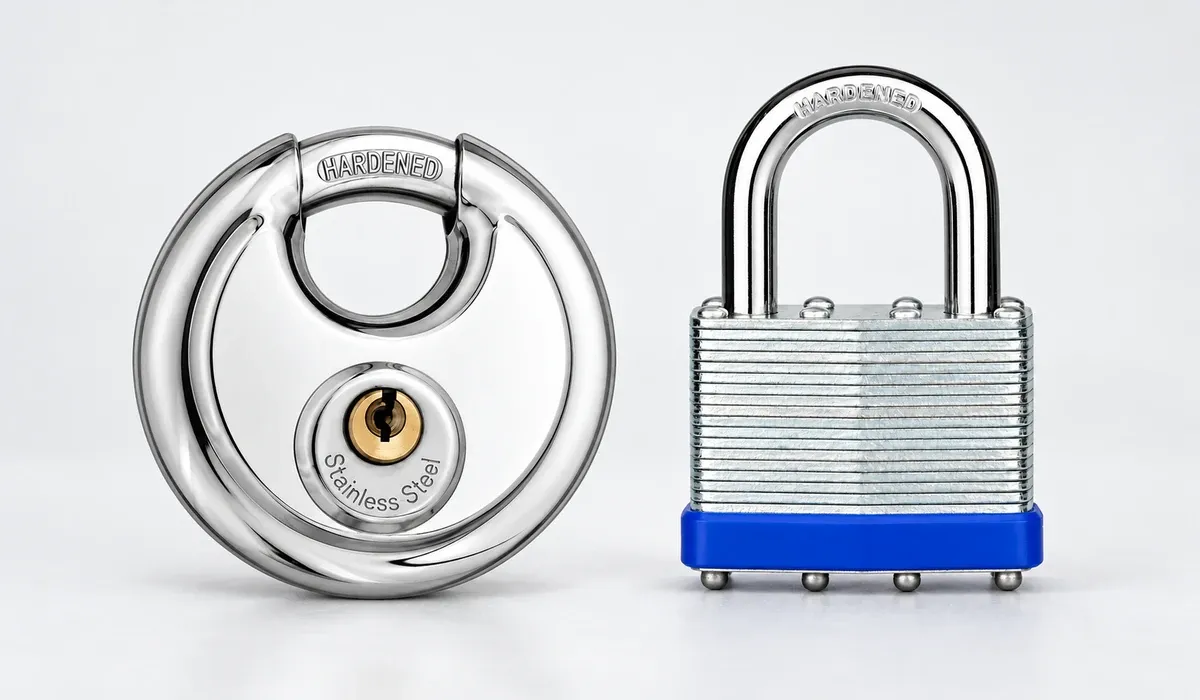
- Indoor & Low-Moisture Environments: Brass and laminated steel padlocks are ideal for lockers, indoor storage, and standard commercial applications. Brass offers natural corrosion resistance, while laminated steel provides excellent mechanical strength against physical attacks.
- Outdoor & Marine Environments: For harsh weather, coastal regions, or high-humidity applications, specify solid stainless steel or thermo-plastic covered brass/steel bodies. Look for hardened boron alloy or stainless steel shackles to resist cutting and sawing attempts.
- Specialty Industrial Uses: In environments with strict electrical safety requirements—such as lockout/tagout (LOTO) protocols in manufacturing plants—nylon-bodied safety padlocks with non-conductive shackles are essential to prevent electrical arcs.
Step 2: Establish Keying Systems and Operational Hierarchy
End-users frequently require organized access control. When sourcing from manufacturers, you must clearly define your keying requirements early in the quotation phase:
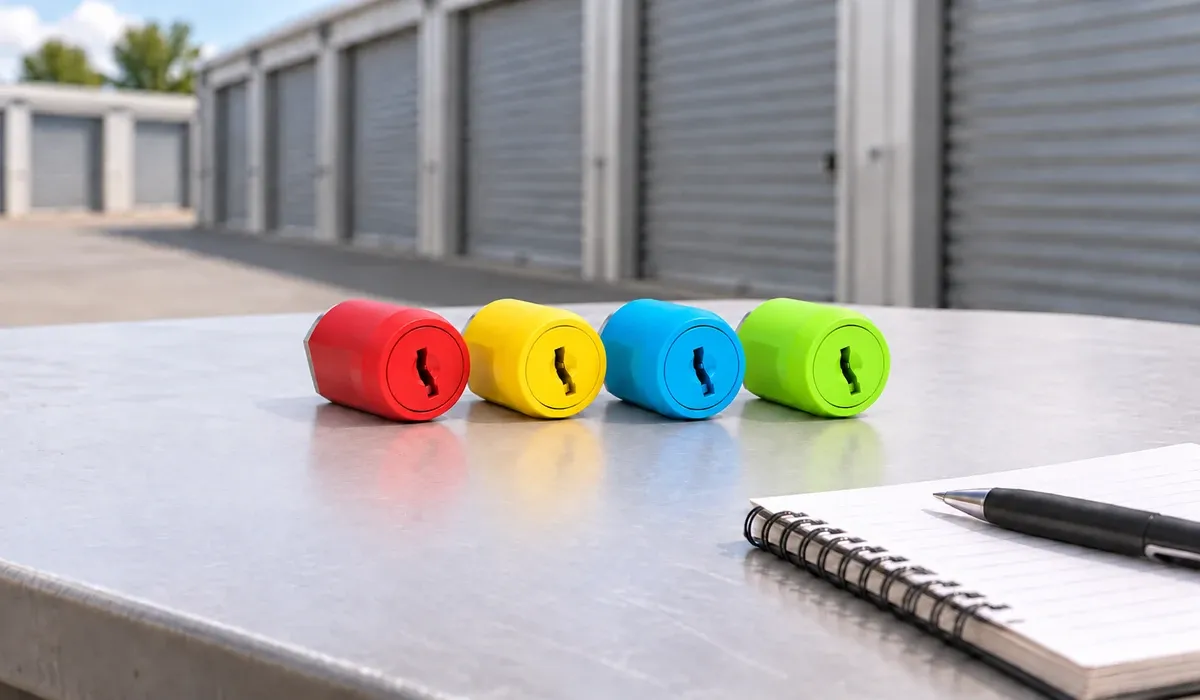
- Keyed Different (KD): Each padlock opens with its own unique key. This is standard for consumer retail and independent lockers.
- Keyed Alike (KA): A single key operates multiple padlocks. This is popular for property managers or industrial teams who want to reduce key-ring clutter across multiple access points.
- Master Key Systems (MK): A hierarchical structure where individual locks have their own unique keys (Keyed Different), but a single Master Key can open every lock within the designated group or facility.
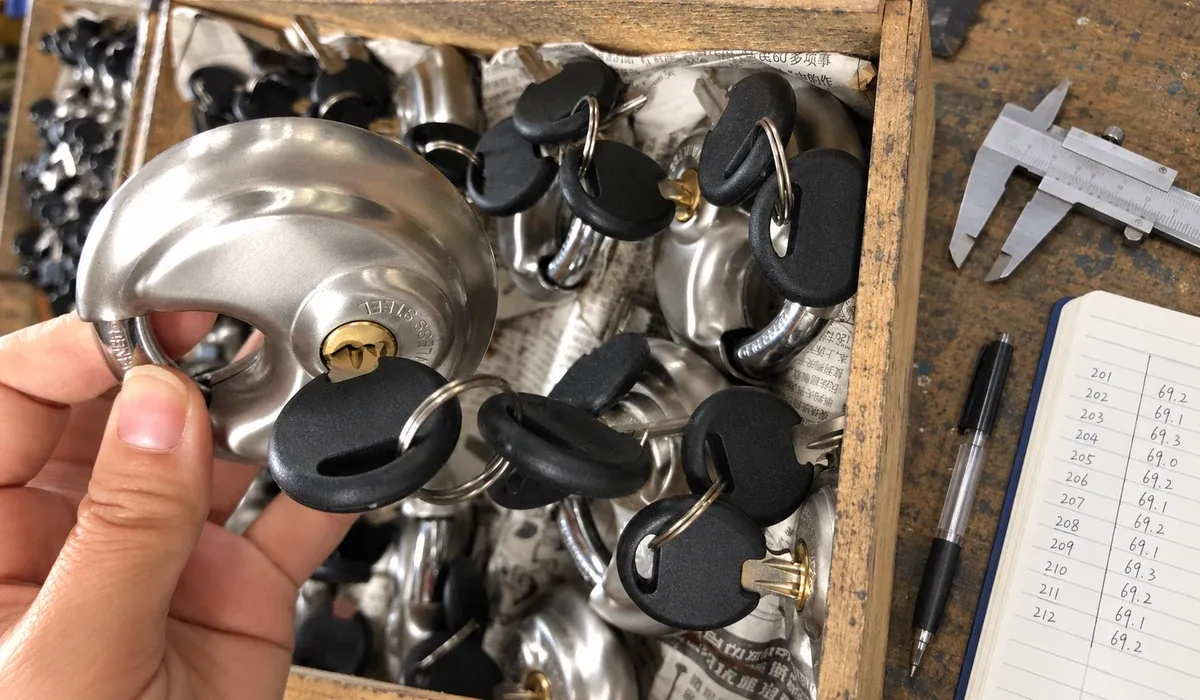
Procurement Tip: Custom keying systems require precise pin-tumbler configurations. Ensure your manufacturing partner can provide reliable code tracking and standard production lead times (typically around 60 days for complex Keyed Alike or Master Key rollouts) to meet your project deadlines.
Step 3: Evaluate Security Grades & Certifications
Padlocks are subjected to physical stress, drilling, shimming, and bolt-cutter attacks. To assure your customers of high quality, look for compliance with recognized industry standards:
- CEN Ratings (European Standards): Ranging from Grade 1 (low risk) to Grade 6 (maximum security), CEN ratings test corrosion, torsion, pulling, and cutting resistance.
- ASTM Standards: Often referenced in North American commercial specifications for wedge and padlock security grades.
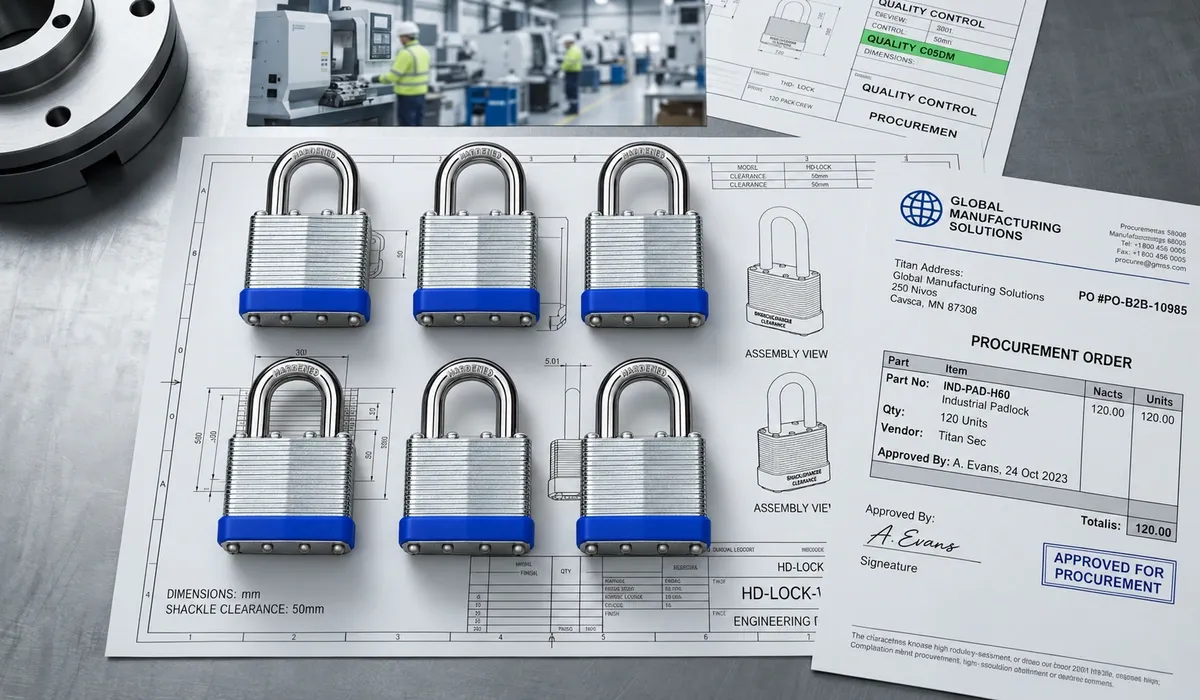
- ISO 9001 Quality Control: Partner with factories that enforce strict pre-shipment inspections (PSI) and transparent manufacturing quality controls—from raw component milling to automated cylinder assembly.
Step 4: Vet Supplier Capabilities and OEM Flexibility
Securing a reliable supply chain goes far beyond comparing unit prices. When evaluating padlock manufacturers or export suppliers, verify the following critical capabilities:
- OEM & Custom Branding: Can the supplier accommodate logo laser engraving or embossing, custom surface treatments, tailor-made color box packaging, or manufacture non-standard shackle clearances to seamlessly fit your proprietary hardware?
- Production Transparency: A reliable manufacturing partner should be fully transparent throughout the process—providing physical samples, verifying raw material specifications, supplying pre-production artwork for your OEM brand, offering initial golden samples (first article inspection) for your approval, showcasing raw component states (such as un-assembled lock cylinders) prior to automated assembly, sharing production progress updates, and providing high-resolution product imagery for your catalog and website.
- Logistics & Palletized Packaging: Discuss export packaging standards early, ideally before final order confirmation. Ensure your supplier optimizes container space and prevents transit damage by utilizing standardized export pallets (e.g., 100x85 cm pallets with secure height limits) and heavy-duty outer cartons. Furthermore, request pre-shipment cargo photographs for absolute order reassurance before the shipment departs.
Conclusion
Sourcing padlocks that match your exact business requirements relies on a meticulous approach: defining the right materials for the climate, clarifying access hierarchies, verifying security standards, and partnering with transparent, experienced manufacturers. By addressing these core parameters during the procurement stage, you safeguard your brand reputation and deliver durable, dependable security solutions to your market.